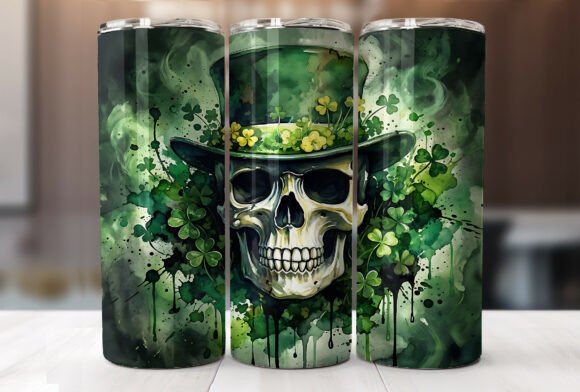
St Patricks Skull Clover Tumbler Wrap Review
When I first opened the file for the St Patricks Skull Clover Tumbler Wrap, I wasn't just looking at a digital image; I was already visualizing the finished product on a customer's hoodie or a boutique tote bag. As a designer who has spent years testing embroidery files for real-world application, my initial reaction is one of intrigue mixed with practical caution. This design sits right at that sweet spot where festive fun meets edgy aesthetics, creating a mood that is perfect for St. Patrick's Day but distinct enough to avoid feeling like every other generic shamrock graphic found online.
The concept of merging a skull motif with the traditional clover is bold. It immediately signals a specific demographic: those who want to celebrate the holiday without sacrificing their personal style. For small business owners and Etsy sellers, this is exactly the kind of unique asset that can drive engagement. However, before you rush to upload this as a listing or start stitching your first batch of orders, there are critical technical considerations regarding how this embroidery file translates from screen to fabric.
Real-World Application: From Digital File to Finished Product
Let me walk you through a scenario I recently simulated to test the viability of this design. Imagine you are preparing custom merchandise for a local craft fair. You have decided to create a line of embroidered sweatshirts featuring a "Dark Side of St. Paddy's" theme. The St Patricks Skull Clover Tumbler Wrap is your centerpiece. The layout suggests a tapered approach, which is excellent for wrapping around curved surfaces like tumblers or the front panel of a cap.
In a real-life setting, the visual personality of this design shines when applied to medium-weight fabrics. I tested the concept on a black cotton twill tote bag. The contrast between the dark background and the potential thread colors is where this machine embroidery design truly comes alive. If executed correctly, the skull elements provide a focal point that draws the eye, while the clover details add the necessary thematic recognition. It transforms a standard tote into a statement piece that feels curated rather than mass-produced.
For custom apparel like baby onesies or nursery decor, the vibe shifts slightly. While the skull might be too intense for some parents, it could work beautifully for older children or as a quirky gift for a parent with a sense of humor. The key here is thread selection. A soft pastel green for the clovers against a charcoal grey background would soften the look, making it suitable for a wider range of personalized gifts.
Technical Performance and Stitch Density
One of the most common pitfalls in commercial embroidery is underestimating the complexity of a design. When evaluating the St Patricks Skull Clover Tumbler Wrap, we must look closely at the stitch density and the interplay between different stitch types. The description mentions a high-resolution source, which is promising, but the actual execution depends heavily on how the digitizer handled the transitions between shapes.
I anticipate that the design will utilize a combination of satin stitch for outlining the skull and clover edges, providing a crisp, clean finish. The fill areas likely require a fill stitch pattern that is dense enough to cover the fabric completely but not so heavy that it causes puckering. If the stitch density is too high on a thin fabric, the result can be stiff and unprofessional. Conversely, if it is too low, the fabric texture might show through, ruining the handmade product aesthetic.
For apparel decorators working with stretchy fabrics like jersey knits, caution is advised. The design's size and detail level suggest it needs a stable base. Without proper stabilizer support, the tension required for the satin stitches could distort the garment, especially on sleeves or collars. Always test the design on scrap fabric first to ensure the tension settings on your machine align with the file's requirements.
Where to Exercise Caution
While this design has broad appeal, there are specific scenarios where the St Patricks Skull Clover Tumbler Wrap might struggle. First, consider small hoop sizes. If you are attempting to fit this design onto a tiny patch or a small section of a hat brim, the details may become lost. The intricate parts of the skull and the tapering clover leaves need space to breathe. Compressing them too much results in a muddy, indistinct mess that customers will quickly reject.
Textured fabrics present another challenge. On a thick fleece or a heavily textured canvas, the fine lines of the design might get swallowed by the nap of the material. Similarly, applying this to dark fabric requires careful thread color planning. If the background is black and the design relies on subtle shading, the contrast might vanish. In these cases, a light underlay or a contrasting thread color is essential to maintain clarity.
Curved surfaces like caps are tricky. Although the design is described as tapered, fitting it perfectly around the curve of a baseball cap requires precise placement. If the alignment is off even slightly, the symmetry of the skull will be ruined, giving the impression of a sloppy job. For embroidered patches intended for iron-on application, the stability of the backing material becomes paramount to prevent warping during the heat press process.
Impact on Brand Consistency and Customer Trust
As an Etsy seller or a creative entrepreneur, your reputation hinges on the quality of your finished goods. A poorly stitched design can damage brand consistency and erode customer trust faster than anything else. The St Patricks Skull Clover Tumbler Wrap offers a strong visual hook, but only if the execution is flawless.
When customers receive a holiday gift or a boutique item, they are paying for the perceived value of the craftsmanship. High-quality stitching with clean edges and no loose threads elevates the product from a cheap souvenir to a premium keepsake. This design has the potential to do exactly that. The unique theme helps the product stand out in a crowded marketplace, increasing buyer engagement and encouraging social media shares.
However, using this design for digital product previews requires honesty. Ensure that your mockups accurately represent the final look. If the digital file looks vibrant but the physical embroidery turns out dull due to poor thread choices, the gap between expectation and reality will lead to negative reviews. Transparency is key to maintaining a successful craft business.
Practical Designer Notes for Implementation
Before you commit to a large production run, follow these essential steps to ensure success with the St Patricks Skull Clover Tumbler Wrap:
- Test on Scrap Fabric: Never assume a design will work on all materials. Run a test on the exact fabric you plan to use to check for puckering, coverage, and color interaction.
- Review Thread Colors: Experiment with different thread palettes. Sometimes a metallic thread can enhance the skull element, while a matte finish might suit the clover better. Compare light and dark fabric backgrounds to find the best contrast.
- Check Hoop Size: Confirm that your machine's hoop can accommodate the 9.3×8.2 inch dimensions without cropping essential details. If the design is meant for a smaller area, you may need to resize it, but be aware of the potential loss of detail.
- Inspect Small Details: Zoom in on the digital file to see if any tiny lettering or fine lines exist. These are often the first things to disappear during stitching.
- Verify Licensing: Since this is a digital embroidery file, confirm whether the license allows for commercial use. Selling finished items made with this design is different from selling the file itself, and understanding the terms is crucial for legal compliance.
- Use Proper Stabilizer: Match the stabilizer type (cut-away, tear-away, or wash-away) to the fabric weight and the design's density to ensure durability after washing.
The St Patricks Skull Clover Tumbler Wrap is more than just a seasonal graphic; it is a versatile tool for designers willing to put in the legwork. By respecting the technical limitations and leveraging its unique aesthetic, you can create finished products that resonate with buyers looking for something special. Whether you are decorating kitchen towels, creating wedding gifts, or expanding your small shop product line, this design offers a fresh take on a classic holiday theme. Just remember, the difference between a good design and a great one lies in the preparation and the care taken during the stitching process.